пятница, 28 января 2022 г.

Cambridge Central Asia Forum (Post-event Summary Report)


Name of event: Intra and extra regionalism in Central Asia: challenges and perspectives 

 Date of event: 28 January, 2022 - 11:00 to 13:00 (GMT+0)

 Location of event: in-person SG2; Contemporary history center, AS Uzbekistan (online)

 Number of attendee: more 50

 Organizer: collaboration with UKRI GCRF COMPASS Project

 Keynote speaker: Professor Rakhimov

 E-mail: mirzonur@yahoo.com


The Cambridge Central Asia Forum held in collaboration with the Centre of Development Studies, University of Cambridge about controversial topic -  Intra and extra Regionalism in Central Asia: Challenges and Perspectives. The seminar was held on online and in-person. Offline seminar attendees participated in SG2, Contemporary history center and online seminar was organised via Zoom Meeting platform in 16:00 p.m with time of Tashkent. 

Seminar opened by Dr. Mirzokhid Rakhimov and he concentrated about Central Asia in historical  perspective of international relations; Regional partnership within Central Asia; Diversity of external regionalism in Central Asia and other issues which will be provided in following statements. Doctor began his speech with notes of Abu Raykhon Beruniy "the history of yesterday is a school of life for us, a clear mirror. We can learn from this, draw conclusions, determine the path to the future". He mentioned about "Great Game" issue, problems of intra regional cooperation, new trends of Central Asia cooperation, Diversity of extra regional initiatives and also main approaches on regionalism. 

Professor Rakhimov continued his speaking SCO in India and Pakistan. He has spoken about books which published between different countries and languages, like, "Insights and Commentaries/ South and Central Asia" edited by Amita Sengupta; Mirzokhid Rakhimov; "Новейшая История Центральная Азии" by Konrad Adenaur Stiftung.


After speech of professor, there was a small questionnaire among speaker and attendees. Participants wanted to know more about the situation of Afganistan, also January events in Kazakhstan and help of the CSTO would influence the CA intra-regional cooperation. Most interesting expression was from Glyn Alban Roberts, he said "What an excellent Central Asian Uzbekistan survey from both a historical and contemporary perspective. I've been twice to Uzbekistan and hope to visit again, maybe in 2022. Thank you very much". 


In the end of the seminar, Doctor closed his speech with one of the Solon's remark "If we want to know where we are going we must know what we want". All members of seminar supported the idea of enlarging academic partnership and joining projects on Central Asia, comparative regional and international studies, analyzing the processes for the correlation and mutual influence of national, regional and global issues.


Wanna give up everything sometimes...


 uhm...

Nilufar Baxodirova

You may know a little bit about me (That's okay, if you don't)

Currently I am sophomore at National University of Uzbekistan. During my post I'll also say about again.

Today (28.02.2021), I wanted to be more than usual. If you ask about myself (not just personal information), not from me exactly, people who know me, such as my friends, groupmates, relatives and others may say like I am so positive (always), (but not true). What I am saying?

Actually, why I am writing this?

Initial steps are always difficult to pass...

That's why I have no any idea to begin with what?

I am confusing.

I am confusing in every situation of my life especially in these days.

I need something new...

I need something new, I don't know what exactly?

Why I am feeling deficiency in every moment?

But, I just wanted to share my feelings today.

For the first time, here, why?

Honestly, I was simple girl when I was studying at school. Then, when I was in high school I prepared to entering University, as others, I got an IELTS (one of my happiest day ever). After that, there was a quarantine, hate those days of my life, even don't want to remember, I 'traveled' at home. But, maybe it helped me, somehow, entered university as a 'grant', in the very first chance. That gave me whole world (can't even imagine). 

University days... friends... places... are unique and priceless ever. Miss them, all of them. 

Consequently, end of my freshman year, started to 'work' as an interpreter (volunteering). Such an amazing moments... (2021 - worthy and bestie year of my life) I'll also share my experiences in my next posts (hope). 

I'm sophomore in university (yeah, already mentioned). Lily began to know about more abroad, being in foreign country, working, studying and etc. (by the way, Lily - it's me) Started to apply scholar/intern/fellowships. But...

But, there is no any good news, yet. 

I don't know why, I wrote about those all. But I tried to begin with some 'little words' about me. 

Let's, I'll do it common.

Like, I'll tell everything one by one. If it's okay?

Maybe, it's not interesting or helpful. 

Anyway

Should begin smth new on me.

"Just because a person doesn't talk about their problems doesn't mean they don't have any."

воскресенье, 23 января 2022 г.

A LOT OF CRITICISM: SUGGESTOPEDIA


Baxodirova Nilufar Umedjon qizi

nilufarbahodirova2002@gmail.com

Second-year student at National University of Uzbekistan named after Mirzo Ulugbek

Abstract: Suggestopedia, one of the humanistic approaches was created within the 1970s by the Bulgarian teacher Georgi Lozanov. It is based on the thought that individuals, as they get older, inhibit their learning to comply with the social standards, and in arrange to reactivate the capabilities they utilized as children, instructors ought to utilize the control of proposal. This paper presents theoretical components, key highlights and the utilize of this strategy in the classroom. The conclusion is that, despite being a part of bothers, suggestopedia has components that can be utilized effectively to educate talking for youthful learners.

Key words: Utilization of music, unwind understudies, a pseudo-passive state, “Suggestology and Outlines of Suggestopedy”, hypermnesia, mental, instructional, artistic, pecking-order.

Ⅰ. Origin of Suggestopedia

Suggestopedia is a strategy created by the Bulgarian teacher and therapist Georgi Lozanov in 1966. This strategy is based on an arrangement of learning suggestions based on the Suggestology. It is said that the strategy of the Suggestopedia quickens learning and a few characteristics of this strategy got to do with the enhancement, the furniture, the organization of the classroom, and the utilize of the music. 

Ⅱ. Techniques of suggestopedia

Through music, the objective is to unwind understudies, deliver cadence to the introduction of etymological substance, and increment their concentration. The teacher or the instructor presents a definitive but normal behavior, instructs linguistic use specifically, too the instructor must be a carrier of the proposal, must have competence in their field, must have an eagerness for the subject, intrigued for understudies, shared regard, humor, pass tests and react prudently in case there were awful comes about. The understudy must display a pseudo-passive state and let the modern dialect include them, understudies must endure and fortify their claim prepare of infantilization, the strategy of Suggestopedia spurs understudies to sit in a circle to perform diverse exercises and in this way be able to see their classmates face to face. Finally, the gather should comprise of twelve understudies which has the same number of ladies as men.

Ⅲ. Faithful views of Suggestopedia

According to “Suggestology and Outlines of Suggestopedy”, the yogis required hypermnesia to be able to protect for future eras a given verbal convention. Among the Brahmins, for case, skilled children were subjected at an early age to an extraordinary kind of preparation that empowered them to create their memory and to memorize the tremendous body of antiquated lessons by heart. Certain yogis had, as their sole occupation, the memorization of sacrosanct compositions so that, indeed on the off chance that all the antiquated books of India were annihilated and as it were one yogi remained lively, he would be able to reestablish the complete writing from memory.[1]

Ⅳ. Recommended environment for suggestopedia

The recommendation is broadly caught on as the basic and in-born capacity of human creatures to be suddenly uncovered to, to be free to choose from and be influenced by various less cognizant and paraconscious jolts whereas connection with the reality. But how can we tackle their control and make judicious utilize of them in a humanistic educational handle? Among diverse signs of the proposal, Lozanov notices specialist and distinction, fringe recognitions, sound and beat, moment plane of communication, other non- particular boosts like motions and pose, facial expression, expression of the eyes, variables of the environment, the state of the desire of the beneficiary, etc.[2]

Remote dialect suggestopedia was tested with and successfully connected in at the Investigate Organized of Suggestology in Sofia headed by Prof. Lozanov within the period 1964- 1985. [3]

Within the handle of suggestopedic learning communication glory is flagged (as uncovered in an examination based on the sees of experienced suggestopedic instructors) by the taking after identity characteristics of the instructor (Mateva, 1997):

  • Well-educated and intelligent
  • Touchy-feely and enthusiastic
  • Tolerant, elegant, and diplomatic
  • Tricky communicator
  • Good-looking and attractive
  • Sensitive and empathetic
  • Creative and emotive
  • A perfect expert in psychology[4]

Ⅴ. Types of suggestopedic signals

The standards are figured out through the resolute solidarity of the three bunches of suggestopedic implies: mental, instructional, and artistic (means of art).

1. The mental implies (psychological) are one viewpoint of the other two bunches, but they too have extra particular importance. To utilize these implies effectively instructors ought to secure preparation comparative to that of doctors-psychotherapeutics. 

Instructors must be commonplace with the various variations of part conscious perceptional and consider forms so that they can utilize them in instructing. The educator ought to be ace of craftsmanship of interfacing the fringe recognitions and the enthusiastic jolt in all-round coordination with the all-inclusive displayed fabric. Hence, the mental implies for watching the solidarity of the three suggestopedic standards make it basic for instructors to be hypothetically and essentially well-trained. Within the preparation of "teaching understudies how to memorize", the instructor must not as it were provide them the particular material, but he must moreover instruct them how to assist themselves in learning it.

2. The instructional (didactic) implies a call for the generalization of the meaning of the codes and the broadening of the methodic units. 

The generalization is brought around on the premise of the most objective laws of the specific subject and one must look for to set up its connection to other schools in five, ten, or more lessons. In this way, one lesson comprises fabric (worked out within the over way) which is given in standard schools in five, ten, or more lessons. The extended methodic unit makes it conceivable to got a common thought of the basic objective laws of all the fabric examined, and the generalization of the codes makes it conceivable to overcome the appearing restriction of short-term memory. This rule requests significance in instructing, the evasion or rehashed works out on subtle elements, and the continuous presence of the unused subjects for ponder. The propensities "pecking order" is dodged, tall inspiration is made and imagination is analeptic.

3. The aesthetic (artistic) implies of suggestopedy present an uncommon kind of literating-and-stimulating pedantic craftsmanship (music, writing, acting, etc.) into the method of educating and learning. 

They are not an illustrative arrangement within the preparation of learning but are built into the substance of the lesson. They advance the suggestopedic mental organization by presenting, on the moment plane, a wealth of harmonized peripheral perceptions. The creative implies are used both to form a wonderful atmosphere during the method of accepting, memorizing, and understanding the central data given within the lesson, and to upgrade the suggestive setup for saves, demeanor, inspiration, and anticipation. Through the creative implies a portion of the fabric is promptly acclimatized. After this, the work of the teacher gets to be simpler and pleasanter.[5]

Ⅵ. Conclusion

From the over talk, a few conclusions can be drawn. The objective of Suggestopedia is to quicken the method of dialect learning. The relationship between the instructor and the understudies in suggestopedic instruction is like guardians and children. The educating-learning handle is "learner-centered". The teacher initiates intuitively with the total bunch of understudies and with people from the beginning of the course. Afterward, the understudies start interacting themselves. One of the basic standards of the strategy is improving the students’ feelings of unwinding and certainty. The understudy mistakes are redressed delicately, with the educator utilizing a delicate voice. Suggestopedia employments four fundamental stages as follows: presentation, dynamic concert, detached concert, and hone. Suggestopedic instruction has positive cognitive, motivational, enthusiastic, and social impacts on the learners.


[1] Galya Mateva (2018). An Introductory Guides to Suggestopedia; Project Team of Technical Training Bulgaria; p7

[2] Galya Mateva (2018). An Introductory Guides to Suggestopedia; Project Team of Technical Training Bulgaria; p26

[3] Galya Mateva (2018). An Introductory Guides to Suggestopedia; Project Team of Technical Training Bulgaria; p27

[4] Galya Mateva (2018). An Introductory Guides to Suggestopedia; Project Team of Technical Training Bulgaria; p30

[5] G.Lozanov, Bulgaria (Paris; November 1978); “Suggestology and Suggestopedia” – Theory and Practice; p33-34-35

пятница, 7 января 2022 г.

Why we should write diary or daily journal by Benjamin Hardy, PhD


 "The reason you want to get out of your day-to-day routine and environment is so you can step out of the trees and see the forest. You need some fresh air. You need to breath and reset — just like fasting for your body — from the constant stress of going."

"You want to put yourself into a peak-state before you start writing. Naturally, being out of your regular environment will trigger positive emotions, especially if you know you’re going to spend the next few hours diving deep into learning, recovery, planning, and visualization."

"The mainstream belief, which stops so many people from developing meditative habits, is that meditation is about stopping your mind from thinking."

"This isn’t what meditation is for. Meditation is for getting clear on what you want, and ultimately, about living a better life. Meditation can take on many forms. As can prayer. To me, both go hand-in-hand. And giving yourself some time to pray and meditate just before you write in your journal puts you in an elevated mental state to write from."

"You want to write from a position of confidence, resolve, hope and expectation. This mental context will determine the quality and depth of the ideas and emotions you experience while you write."

"To quote Charles Haanel, considered to be the father of modern self-improvement: “Remember that no matter what the difficulty is, no matter where it is, no matter who is affected, you have no patient but yourself; you have nothing to do but convince yourself of the truth which you desire to see manifest.”"

"For example, getting a college degree so you can get a great job is a means goal. But what is the end? The end is what really matters, and you can save a lot of trouble by beginning and continuing with the end in mind. You can avoid pursuing goals that are societal expectations."

"Every week, it’s important to reflect on your previous week, and to make better plans for the following week."

"During this recovery session, it’s key to not browse the internet, social media or email. It’s good to have your phone with you, but only to act upon insights you get while writing in your journal, while listening/reading a book, or while pondering/reflecting."

During my winter holiday and beginning of the new year I decided to build my own small atmosphere and little beautiful word. What exactly say within these my words, I want to begin writing small articles, motivational statements for people who does not have any willing to live anymore or who does not have self-confidence and hope before doing something, or there are some people who wants to achieve big goals but, they do not how to start this. For that reason, try not to miss my little advices in this site and my social web-pages.


 http://nilufarbaxodirovasworld.tumblr.com

https://www.linkedin.com/in/nilufar-baxodirova-014898227

Думаю, тебе понравится эта история: " Begin Your New Year With Positive Thoughts " от nilufarbaxodirova на Wattpad https://www.wattpad.com/story/296867248?utm_source=android&utm_medium=org.telegram.messenger&utm_content=share_writing&wp_page=create&wp_uname=nilufarbaxodirova&wp_originator=%2BfT2ZSmUnMYf%2Fy2GLEIwGRyphE6rOOc5bKJbrt3MW%2BivI3S4dHrkALxnLhqc2feTeqAQ8NE7CJcYoFQTFuAxEhSdGLOf48RBgF7GoO5o%2FS4nnYkiYxWQ5s67V86NRlMX

My @Quora profile https://www.quora.com/profile/Nilufar-Baxodirova-Umedjon-Qizi?ch=18&oid=1633989665&share=ab38a768&srid=hh5T5x&target_type=user

воскресенье, 19 декабря 2021 г.

Post-Event Summary Report

Name of event: "The use of ICT in Foreign Language Teaching and Learning"

Date of event: December 13, 2021

Location of event: National University of Uzbekistan named after Mirzo Ulugbek ( + online)

Number of attendee: Approximately 150 members

Organizers: National University of Uzbekistan; Universitas Muhammmadiyah Purworkerto

Keynote speaker:  Rima Olimjonovna PhD; Shelia Anjarani M.Pd; Mr.Furqon - moderator and master of ceremony

ICT is considered to be one of the most important basic building block of a society. It is a need for every aspect of our life, and education is not an exception. The foreign English learners are using ICT to get more access to the information in all around the world.  However, ICT’s are essential tools in many educational institutions. The use of ICT increases the scope of teaching-learning process.  It  provides  with  new  learning  material. During this online webinar organizers and speakers were well-planned and indefectible, they mentioned about every detail of ICT Teaching and Learning, in the end of the webinar participants got useful responses to their questions. The purpose of the present various presentations is to highlight the positive effects of ICT in order to keep up with the modernized communities in the current digital world. To meet this end, some advantages, importance, and need of ICT in foreign language learning and teaching had presented. Therefore, it is affirmed that using ICT in foreign language teaching will have positive effects on both the teachers and learners to help them in following up the modernized world which is full of new demands of technology.

Initial part of conference had begun with Rima Olimjonovna, PhD, from National University of Uzbekistan. The first speaker talked about different pros of ICT and showed her own Presentation to all participants. She said that, first need to know what the concept of ICT is. ICT stands for Information and Communication Technology. Some people think that IT and ICT are the same, but it is not correct where ICT is broader than IT.  ICT covers all technologies that help people to communicate and  manipulate information.  ICT is  a universal  tool  for  globalization.  Students of  developed  countries  can’t imagine their life without ICT. It also works as an assistant for teachers in all around the world. In the middle part of her speech, she talked about several softwares which she uses to her students, such as, blogspot.com; padlet.com. She also did an small experiment with student who are participating from Indonesia, they learnt how to use padlet.com and they shared their names, occupations, addresses in social media and even their pictures.

Second part continued with perfect speech of Shelia Anjarani from Universitas Muhammadiyah Purworkerto. Her plan about reflecting our technology integration in ELT, story from the online class and technology or pedagogy. But, for all attendees attracted by  English language proficiency between Asian countries, because Singapore witnessed first place in this rate, Shelia also mentioned about Uzbekistan and it accounted for 447, unfortunately. Shelia Anjarani also did an experiment with student who were in this webinar, they used one online site named menti.com and participants described online teaching and learning with one word, it seemed so easy and interesting for all of them. Second speaker said that the internet saves our time and energy. We can learn English lessons through internet without the need of travelling and without the need of leaving home or bedroom. With internet students can learn English anywhere at any time and whenever they want. The internet offers instant feedback to the learners which enhance the learning experience of the students. 

By the way, discussion part was little bit controversial. Because both of speakers were asked different confusing questions from different students who were uzbek, indonesian and even russian. Nilufar Baxodirova from National University of Uzbekistan asked question - " Is it ok, if people continue use the technologies? What I mean by this, if education system uses remote learning and teaching, they will come across various troubles related to internet, wi-fi connections or some problems with electric-powering." This question was to Shelia Anjarani, and she answered very clearly - it depends on country, because, government should prepare or do perfect system in order to use remote learning and teaching, because it is also easy to study online in foreign universties and participate in online conferences. 

The use of ICTs in English Language learning and teaching is an area not yet fully explored. Both learners and teachers have a lot to gain by their use as well as to offer.

Technology. Some people think that IT and ICT are the same, but it is not correct where ICT is
broader than IT. ICT covers all technologies that help people to communicate and manipulate
information. ICT is a universal tool for lobalization. Students of developed countries can’t

ICT in order to keep up with the modernized communities in the current digital world. To meet
this end, some advantages, importance, and need of ICT in foreign language learning and teaching
will be presented. Therefore, it is affirmed that using ICT in foreign language teaching will have
positive effects on both the teachers and learners to help them in following up the modernized
world which is full of new demands of technology.
ICT is considered to be one of the most important basic building block of a society. It is a need for
every aspect of our life, and education is not an exception. The foreign English learners are using
ICT to get more access to the information in all around the world. However, ICT’s are essential
tools in many educational institutions. The use of ICT increases the scope of teaching-learning
process. It provides with new learning material.
ICT is considered to be one of the most important basic building block of a society. It is a need for
every aspect of our life, and education is not an exception. The foreign English learners are using
ICT to get more access to the information in all around the world. However, ICT’s are essential
tools in many educational institutions. The use of ICT increases the scope of teaching-learning
process. It provides with new learning material.

четверг, 16 декабря 2021 г.

Impression about Webinar

Nilufar Baxodirova

20-21-22 Yakkatut Street

Chilanzar District, 100117

I have recently become aware of the conference about “The use of ICT in Foreign Language Teaching and Learning” which Rima Olimjonovna PhD from National University of Uzbekistan, Mr. Furqon moderator and master of ceremony and Shelia Anjarani, M.Pd(Magister Pendidikan- Master of Education.) from Universitas Muhammadiyah Purwokerto organized in December 13, 2021. Location also was available to every participant of this software. For example, I am and my groupmates were together while we were taking part of this online program.  I am very lucky and delighted with attending in this special event - International Conference.

I am a sophomore student at the National University of Uzbekistan, and I really feel that my attendance to this event helped me progress and reach my knowledge what related to my future goals. I have learned almost everything there is to know from books and videos, but I think attending this conference was service to me to the next level.

From initial part of conference, our lecturer Rima Olimjonovna PhD did an aesthetic speech with her ppt presentation which was easy on the eye. She mentioned about ICT strategies which she used to when she taught us with those strategies, such as, blogspot.com; padlet.com and etc.

Next part about Shelia Anjarani, M.Pd,( Magister Pendidikan- Master of Education.) she also introduced about her experiences and methods which she uses all time. I was attracted with one fact about efficiency of English between various countries. She said that Singapore is the first place in this rate, and Uzbekistan unfortunately is in 447 place in this rate. But, I hope that we will improve and teach English Language to the Uzbek population.

I know that there is nothing else that would help me in my career more than seat the these kinds of conferences.

пятница, 3 декабря 2021 г.

Paraphrasing


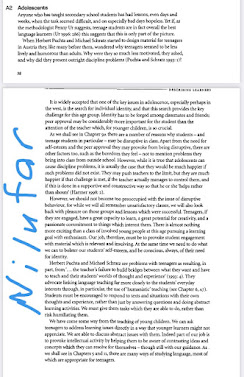
It is broadly acknowledged that one of the key issues in youthparticularly maybe within the west, is the seek for person personalitywhich this look gives the key challenge for this age gather. Character has got to be manufactured among classmates and companions; peer endorsement may be significantly more vital for the understudy than the consideration of the instructor which, for more youthful children, is so crucial.

 As we should see in chapter 9a there are number of reasons why understudies and adolescent understudies in specific - may be troublesome in lessonSeparated from the require for self-system and peer endorsement they may incite from being troublesome, there are other variables as well, such as the room they feel - not to say issues they bring into lesson from exterior school. Be that as it maywhereas it is genuine that teenagers can cause teach issues, it is as a rule the case that they would be much more joyful on the off chance that such issues did not exist. they may thrust instructors to the constrain, but they are much more joyful in case that challenge is met, on the off chance that the educator really manages to control them, and in the event that typically worn out a strong and valuable way so that he or she “Helps rather than shouts” (Harmer 1998:2)

Be that as it may, we ought to not gotten to be as well engrossed with the issue of troublesome conduct, for whereas we all keep in mind unsuitable classes, we'll too see back with delight on those bunches and lessons which were fruitfulYoung peoplein case they are engaged, have an awesome capacity to memorize, an incredible potential for creativity, and an enthusiastic commitment to things which intrigued them. There's nearly nothing more energizing than a lesson of included youthful individuals at this age seeking after a learning objective with excitement. Our workin this manner, must be to incite understudy engagement with material which is relevant and involving. At the same time we have to be do what we are able to reinforce our student' self-esteem, and be cognizantcontinuously, of their require for personality.

Herbert Puchta and Michael Schratz see issues with youngsters as coming about, in portion, from "... the teacher's disappointment to construct bridges between what they need and got to educate and their students' universes of thought and encounter" (1993: 4). They advocate connecting dialect instructing distant more closely to the students' regular interface through, in specific, the utilize of "humanistic" instructing (see Chapter 6, A7). Students must be empowered to reply to writings and circumstances with their possess considerations and involvementinstead of fair by answering questions and doing theoretical learning exercises. We must provide them errands which they are able to do, instead of hazard mortifying them.

We have come a few way from the instructing of youthful children. Able to inquire young people to address learning issues straightforwardly in a way that more youthful learners might not appreciate. We are ready to talk about unique issues with them. without a doubt portion of our work is to incite mental movement by helping them to be mindful of differentiating thoughts and ideas which they can resolve for themselves - in spite of the fact that still with our direction. As we might see in Chapters 5 and 11, there are numerous ways of examining dialect, most of which are suitable for young people.

Girl who lives in the village

  My name is Mary Katherine Blackwood. I am eighteen years old, and I live with my sister Constance  in Blackwoods   Castle . I have often t...